
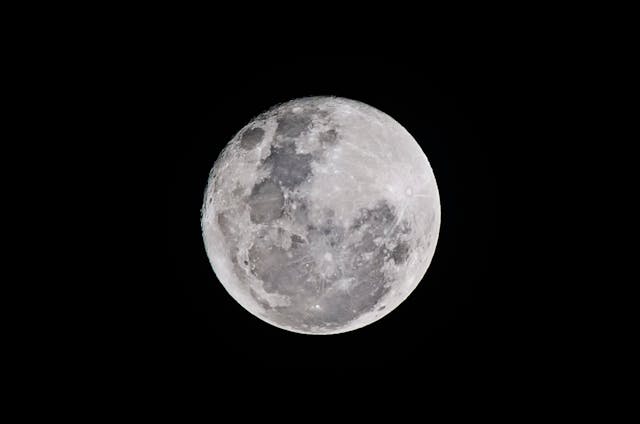

Moon has always been an interest to humankind. Since poets talked of it as silver and scientists mapped its craters, the question of what the Moon really looks like has not been unimportant. As you go outside during a clear night, there is a possibility of the Moon appearing brassy white, nearly yellow and even pastel-orange looking further along the horizon. But all this leads to one interesting question: what do you think is the true colour of the Moon?
Although it is popularly believed, the Moon is not shining white or gold. Its real colours are far less vivid and closer to geological, sun rays, refraction, and weather. So what is the actual appearance of the Moon, why is its appearance so badly misjudged and what are the special colours that the surface of the Moon possesses?
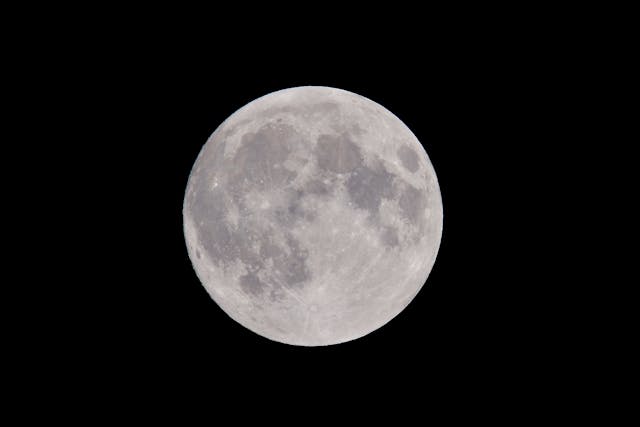
Table of Contents
What We See vs. What Exists
We see the Moon bigger than it is much brighter when we view it through the lens of the Earth. In most cases our brain interprets it as a white glowing disc. Occasionally, however, according to the position, relative to the earth, in which it is placed, the Moon appears of a palest yellow or orange. It is this impression created by the atmosphere of the earth that scatters light.
In practice the top of the calm end of the Moon is not pure white and is sprinkled with grays. Light grey areas are, by far, the brightest, whereas enormous volcanic plains nearly take on the shape of almost black. These gentle contrasts are the reason behind the well-known dark spots we call maria and the highland areas that are light in colour. To our naked eye the distinction is slight. Telescopes or spacecraft, however, reveal a richer palette than most people imagine.
Why the Moon Appears So Bright?
One of the great misconceptions about the Moon is that it glows brightly because of its surface. The truth is that the Moon is actually quite dark. Its reflectivity, known as albedo, is only around 10%. That means it reflects about a tenth of the sunlight that falls on it, similar to worn asphalt on Earth.
So why does it shine so brilliantly in the night sky? The answer lies in proximity. The Moon is Earth’s closest neighbor in space, just about 384,400 kilometers away. Even though it is a poor reflector, its nearness allows that small fraction of light to reach us strongly. Against the darkness of the night sky, this reflected light makes the Moon appear brighter than it really is.
Geological Colours Hidden in the Gray
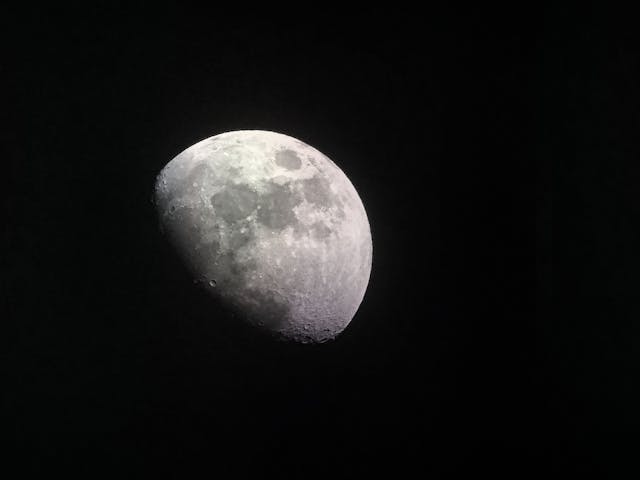
Although the Moon looks uniformly gray from afar, its surface materials tell a more detailed story. The landscape is covered by different types of rocks and minerals that influence its colour:
- Mare Basalts: These are ancient volcanic plains, darker than their surroundings. They give the Moon much of its shadowy look, appearing almost black compared to the highlands.
- Anorthosite: Found mostly in the lunar highlands, this rock is lighter in tone. It reflects more sunlight, contributing to the brighter patches of the Moon.
- Regolith: The powdery, dusty blanket covering the Moon is formed by billions of years of meteorite impacts. Its fine particles scatter light in different ways, producing varying shades of gray.
Beyond the dominant grays, close-up photography has revealed very subtle hues. Some regions display a bluish tint, while others show faint reddish or brownish tones. These differences come from variations in mineral content. For example, areas rich in titanium can appear slightly bluer, while iron-rich zones lean toward reddish-brown.
The Role of Earth’s Atmosphere
While the Moon’s surface sets its natural colour, the atmosphere of Earth changes how we see it. The same scattering effect that makes sunsets look red also affects the Moon’s light.
When the Moon is low on the horizon, its light travels through more of Earth’s atmosphere. Dust and gases scatter shorter wavelengths like blue and green, leaving behind longer wavelengths such as orange and red. That is why a rising or setting Moon can look golden or deep orange. When it climbs higher in the sky, the light passes through less atmosphere, making it appear whiter.
Sometimes, rare atmospheric conditions create unusual appearances. After major volcanic eruptions or massive wildfires, fine particles can scatter light in such a way that the Moon looks bluish or even greenish. These rare cases are not due to changes in the Moon itself but purely to Earth’s filtering effects.
Earthshine: A Subtle Glow
Another fascinating effect is Earthshine, visible when the Moon is a thin crescent. The bright sliver of the Moon is directly lit by the Sun, but the darker portion is faintly illuminated as well. This glow is sunlight reflecting off Earth’s surface and atmosphere, then bouncing onto the Moon. Earthshine can reveal a dim outline of the entire Moon, sometimes called “the old Moon in the new Moon’s arms.”
Interestingly, Earthshine often gives the darker part a slightly bluish tone, since Earth reflects a lot of blue light due to its oceans and atmosphere. This adds yet another subtle layer to the Moon’s apparent colouring.
The Myth of the “Blue Moon”
The phrase “blue moon” is commonly used to describe a rare extra full moon in a calendar cycle. However, there are rare occasions when the Moon actually does appear blue. This happens when the atmosphere is filled with particles just the right size to scatter red light while letting blue light pass through.
Events like the eruption of Krakatoa in 1883 or large-scale forest fires have created genuine blue Moons observed by people around the world. Still, it’s important to note that this effect is entirely atmospheric. The surface of the Moon itself remains unchanged, keeping its natural gray palette.
How Cameras Reveal the Moon’s True Colours?
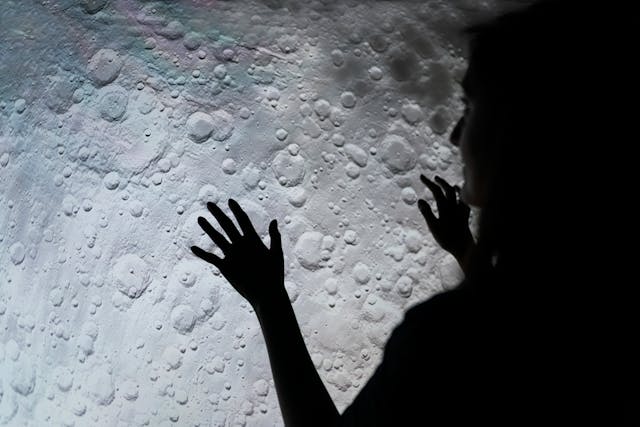
Modern technology has given us a clearer picture of the Moon’s actual colours. High-resolution cameras and telescopes with sensitive sensors can pick up subtle differences invisible to the naked eye. When these images are enhanced, they reveal blue, brown, and reddish tones scattered across the lunar surface.
These enhanced photographs are not false, they amplify the slight colour variations already present, showing us details that our eyes alone cannot perceive. For example, the Apollo missions brought back samples of basalt that appear dark gray, but under certain light they reveal hints of blue or green. This confirms that the Moon’s colours, while understated, are diverse.
Why the Moon’s Colour Matters?
Understanding the Moon’s colour is not just about aesthetics, it reveals scientific truths. The different shades indicate the presence of specific minerals, which helps scientists reconstruct the Moon’s geological history. By studying its colours, researchers can map volcanic regions, impact craters, and even potential resources for future lunar missions.
Colour variations also give insights into how the Moon formed. Most scientists agree that the Moon was born out of a colossal impact between Earth and a Mars-sized body billions of years ago. The way its minerals are distributed, and the way they reflect light, provides evidence for this dramatic origin story.
So, What Is the Real Colour of the Moon?
After peeling back the layers of perception, atmosphere, and geological history, the answer is clear: the Moon’s real colour is a collection of subtle grays, ranging from nearly black volcanic plains to bright gray highlands. Within these grays are whispers of blue, red, and brown, caused by different minerals beneath the surface.
To our eyes from Earth, the Moon usually looks white or yellow, but this is an illusion created by distance, brightness, and atmospheric scattering. The true Moon is far more modest, painted in earthy tones that tell the story of ancient volcanoes, asteroid impacts, and billions of years of cosmic evolution.
Conclusion
The Moon is not a shining silver lantern, nor is it golden or pale blue by nature. Its authentic colour is subdued, rooted in the geology of basalt, anorthosite, and fine lunar dust. Yet, through the play of sunlight and the filtering effects of our atmosphere, the Moon takes on many disguises, orange at the horizon, red during an eclipse, bluish after rare volcanic eruptions, and softly glowing through Earthshine.
In truth, the beauty of the Moon lies not in a single colour but in the story its shades tell. Each crater, each patch of darker basalt, each brighter highland reflects a chapter of lunar history. By looking beyond appearances, we find that the Moon is not just a mirror in the sky, it is a world of subtle colours waiting to be explored.
For more information visit our website.
