


Since the dishwasher main purpose is to wash your dishes, what should you do when the appliance is the one getting dirty? When your machine stinks, cleans poorly or leaves a residue on your dishes, it’s best to clean it thoroughly. We’ll show you the best way to clean all parts of your dishwasher and offer monthly maintenance suggestions.
Table of Contents
Why You Should Clean Your Dishwasher?

While your dishwasher uses hot water and cleaners every day, it still gathers bits of food and soap, greasy stains and tough buildup from the water. Such a buildup might result in:
- Foul odors
- Cloudy glasses
- Reduced cleaning performance
- Mold or mildew in seals and corners
Regular cleaning extends your dishwasher’s lifespan and keeps your dishes truly clean.
How Often Should You Clean Your Dishwasher?
- Wipe down seals and remove food debris: Every week
- Run a deep clean cycle (with vinegar and baking soda): Once a month
- Clean filter and spray arms: Monthly or every 2-3 months depending on usage
- Descale (for hard water areas): Every 3–4 months
Let’s walk through the steps of how to clean dishwasher the right way.
Step-by-Step: How to Clean Dishwasher Thoroughly
Step 1: Empty the Dishwasher
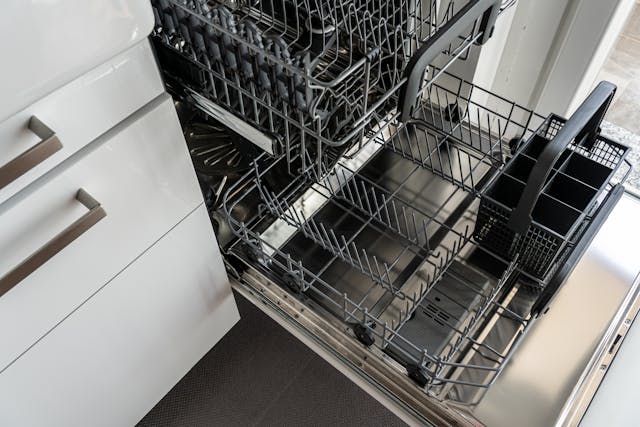
Make sure the dishwasher is completely empty. Take out all racks and utensil holders so you can access every part easily.
Step 2: Remove and Clean the Filter
Most dishwashers have a removable filter at the bottom (under the bottom spray arm). Here’s how to clean it:
- Twist and pull it out.
- Rinse it under hot water.
- Scrub gently using a soft toothbrush and dish soap.
- Rinse again and reinstall.
Why it matters: A clogged filter leads to poor drainage and smelly buildup.
Step 3: Clean the Spray Arms
Spray arms can get clogged with mineral deposits or food bits.
- Remove the spray arms (check your manual for specific instructions).
- Use a toothpick or needle to clear the holes.
- Rinse them under hot water.
- Reinstall the spray arms securely.
Step 4: Wipe the Gasket and Door Edges
Use a damp cloth with warm soapy water or white vinegar to wipe down:
- The door seal (rubber gasket)
- Inside edges of the door
- The detergent and rinse aid dispensers
These areas often harbor grime, mold, or mildew.
Step 5: Clean the Drain
Check the bottom of the dishwasher near the filter for any trapped food particles or debris. Remove anything you find. This helps prevent clogs and bad smells.
Step 6: Run a Vinegar Wash Cycle
Place a dishwasher-safe bowl or cup filled with white vinegar on the top rack (no other dishes inside). Run a full hot-water cycle.
Vinegar helps:
- Remove grease and grime
- Neutralize odors
- Break down hard water spots
Tip: Use plain white vinegar—no apple cider or balsamic.
Step 7: Run a Baking Soda Rinse
After the vinegar cycle finishes:
- Sprinkle 1 cup of baking soda across the bottom of the tub.
- Run a short hot-water cycle.
Baking soda helps deodorize and brighten the interior.
Optional: Use Dishwasher Cleaner Tablets
If you prefer store-bought cleaners, brands like Affresh or Finish make tablets designed for deep cleaning. These can be used instead of vinegar and baking soda, typically once a month.
Tips for Ongoing Dishwasher Maintenance

Knowing how to clean dishwasher monthly is great—but adding in regular upkeep will help it stay cleaner longer.
Weekly Maintenance:
- Wipe door edges and gasket
- Check for food debris in the filter
- Run hot water at the sink before starting a cycle (helps the dishwasher start with hot water)
Monthly:
- Clean filter and spray arms
- Run a vinegar or cleaner cycle
- Deodorize with baking soda
Quarterly:
- Descale with vinegar or dishwasher descaling solution
- Deep clean all racks and utensil holders
What Not to Use When Cleaning a Dishwasher
Avoid:
- Bleach (especially if your dishwasher has stainless steel parts—it can corrode the metal)
- Harsh abrasive cleaners (they can scratch the interior)
- Too much vinegar (overuse may harm rubber seals over time)
Always follow the manual for cleaning guidance specific to your dishwasher model.
Signs Your Dishwasher Needs a Clean
Wondering whether it’s time to clean? Watch for:
- Strange smells when you open the door
- Cloudy or spotted dishes
- Water not draining properly
- Visible buildup or gunk inside
- Dishes still dirty after a full cycle
These are red flags—don’t wait for a full breakdown before cleaning.
Natural Alternatives for Cleaning
Prefer eco-friendly methods? Vinegar and baking soda are already natural cleaners, but you can also try:
- Lemon juice: Mildly acidic and great for freshening up
- Essential oils: Add a few drops of tea tree or lemon oil to boost cleaning and scent
- Hydrogen peroxide: A natural disinfectant, great for tough stains or mold (use sparingly)
FAQs About How to Clean Dishwasher
1. Can I use bleach to clean my dishwasher?
It’s not recommended, especially for stainless steel interiors. Use vinegar or dishwasher-safe cleaners instead.
2. How often should I clean the dishwasher filter?
Ideally once a month, or every 2–3 months if you rinse dishes thoroughly before loading.
3. Why does my dishwasher smell bad?
Usually due to trapped food debris or grease buildup. Cleaning the filter, spray arms, and running vinegar/baking soda cycles will help.
4. Can I use vinegar and baking soda at the same time?
It’s best to use them in separate cycles—vinegar first, then baking soda.
5. What’s the best cleaner for dishwashers?
White vinegar and baking soda are affordable and effective. For commercial options, look for Affresh, Finish, or Cascade dishwasher cleaners.
Final Thoughts
The dishwasher helps keep your dishes sparkling—let’s return that favor with a little care. Now that you follow this guide, your dishwasher will remain efficient, keep a pleasant odor and clean your dishes thoroughly each time it runs. Simple upkeep every month is better than facing major expenses or not getting good results down the line.
To get more information visit our blog.
